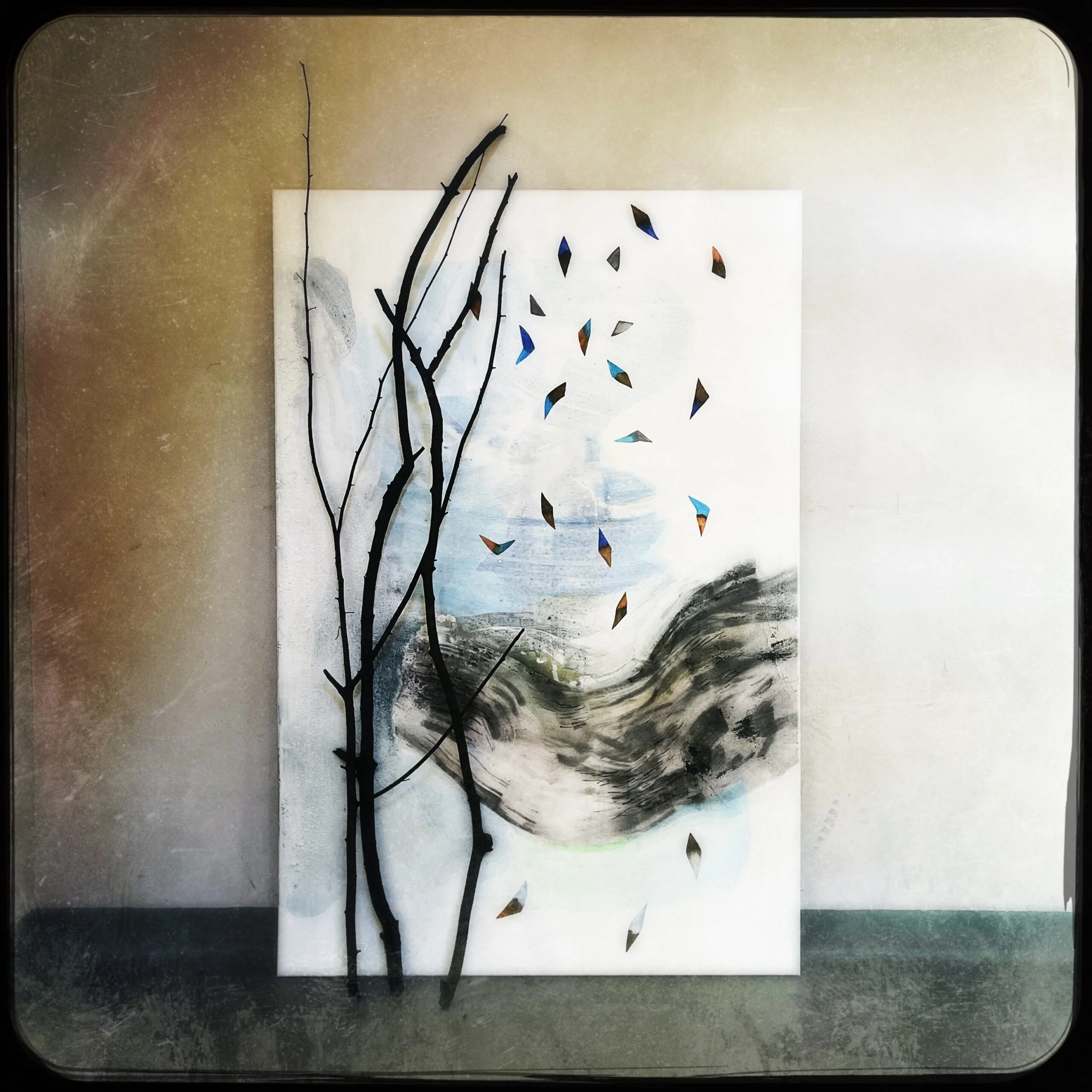
[FCT: TOUCH]
Brief:
1. Select a journey
2. Generate primary research
3. Develop idea – Evaluate which elements are the most curious
4. Translate the work through drawing
Years, seasons, weather all add layers to the terrain and the view.
The season was changing. It moved through hot sun and plentiful flora and fauna, to mist and wet. Mountains and Forrests shrouded in cloud. Then eventually came the stoney cold and dustings of snow.
Shadows and tenacity.
Parts of nature pushing on, not yet surrendering to winters bone.
Allowing the materials to take the lead for this project introduced the purposeful use of sculptural elements to my paintings. I had begun to experiment with this technique towards the later stages of Unit 1.1, but I was unsure how I would continue to include 3D elements in my work. It had happened organically in 1.1, but this time I was deliberately bringing in these alternative materials at the start of the idea.
BROKEN RIVER: A trip to the river banks of the Rhone (Swiss Alps) Changing daily. Weather, growth, erosion, hidden, taken.
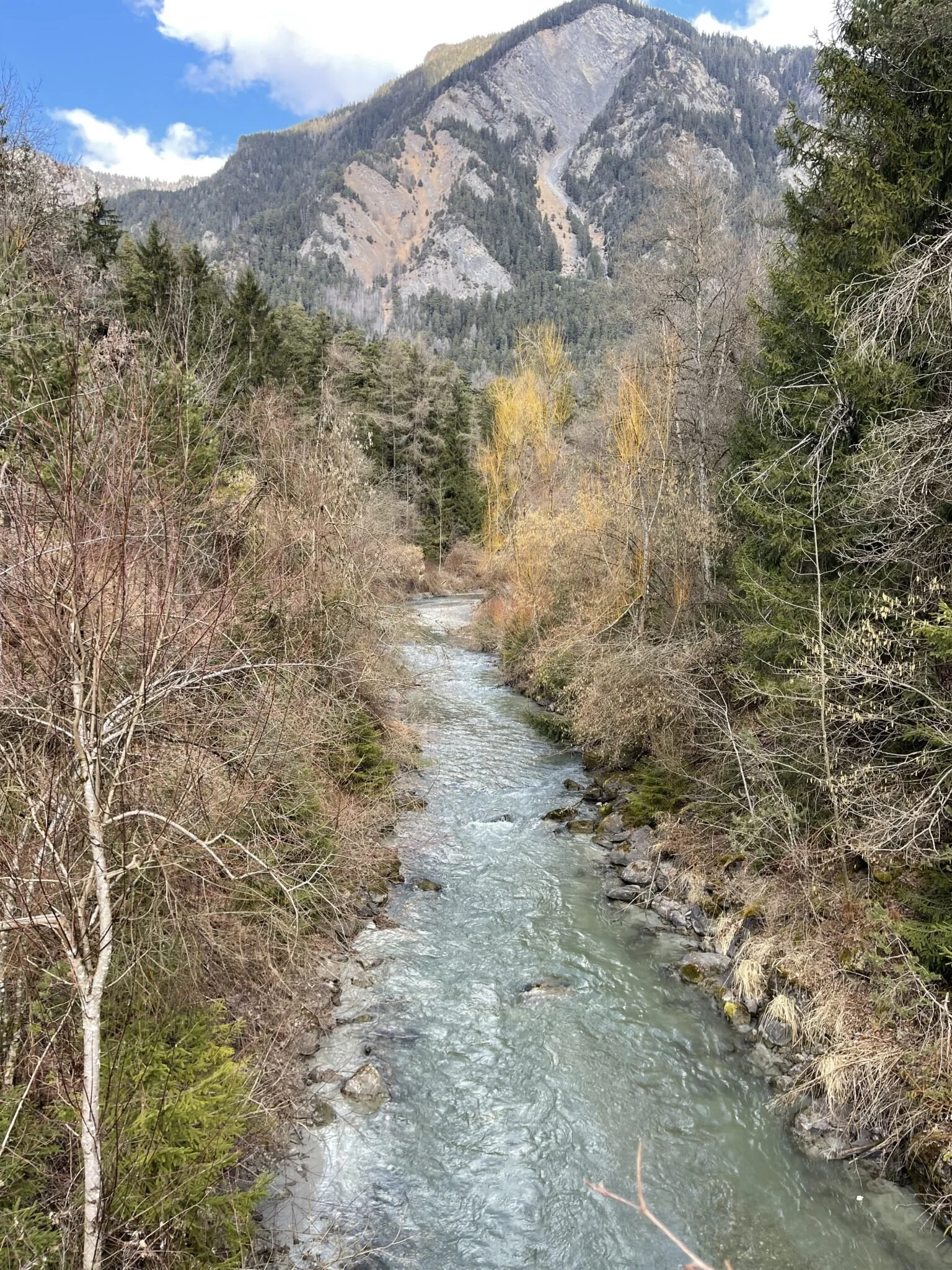
My final piece is a landscape painting. The notion of the brief being to document a journey, instantly tapped into my inclination to attach landscape to nostalgia. In the previous exercise I had looked at the work of Karla Black, a Scottish sculptress. She spoke of a theory whereby sculpture anchors you to the present. More than a painting. That “Painting is an escape; it takes you somewhere else. Sculpture is more rooted”. She noted how the “Physical engulfment with the materials can provide the escape”.
I wanted to explore this theory. I had been looking for a way to blend present and transportation of a subject. I find the nostalgia and depth of feeling created when looking at landscape very overwhelming. When observing I am aware that this experience will be archived. Vaulted.
(Nostalgia is present when experiencing the present).
The landscape / elements / textural qualities, they hold nostalgia. Accessing these textures through artistic practice starts to make sense of all these moments, and act as a grounding effect. As I began to shift my focus to the collecting of materials directly from the landscape, I discovered it’s the textural qualities that are the triggers. Physical sensations realised or imagined that connect the past, present and a gateway to the future.
I chose to document my regular walk to the banks of the River Rhone. I had been the week previously to collect ice from the frozen puddles for the ‘Translations’ exercise. While gathering the ice, I had paid more attention to the varying textures of the terrain. Continuous layering, of terrain, bark, stone, moss, frost. Climbing up the sides of the river, across the track, and high up into the forests above. Collections of branches and sticks washed downstream, holding place against the rocks. And gritty banks shaped and dappled by the changing current.
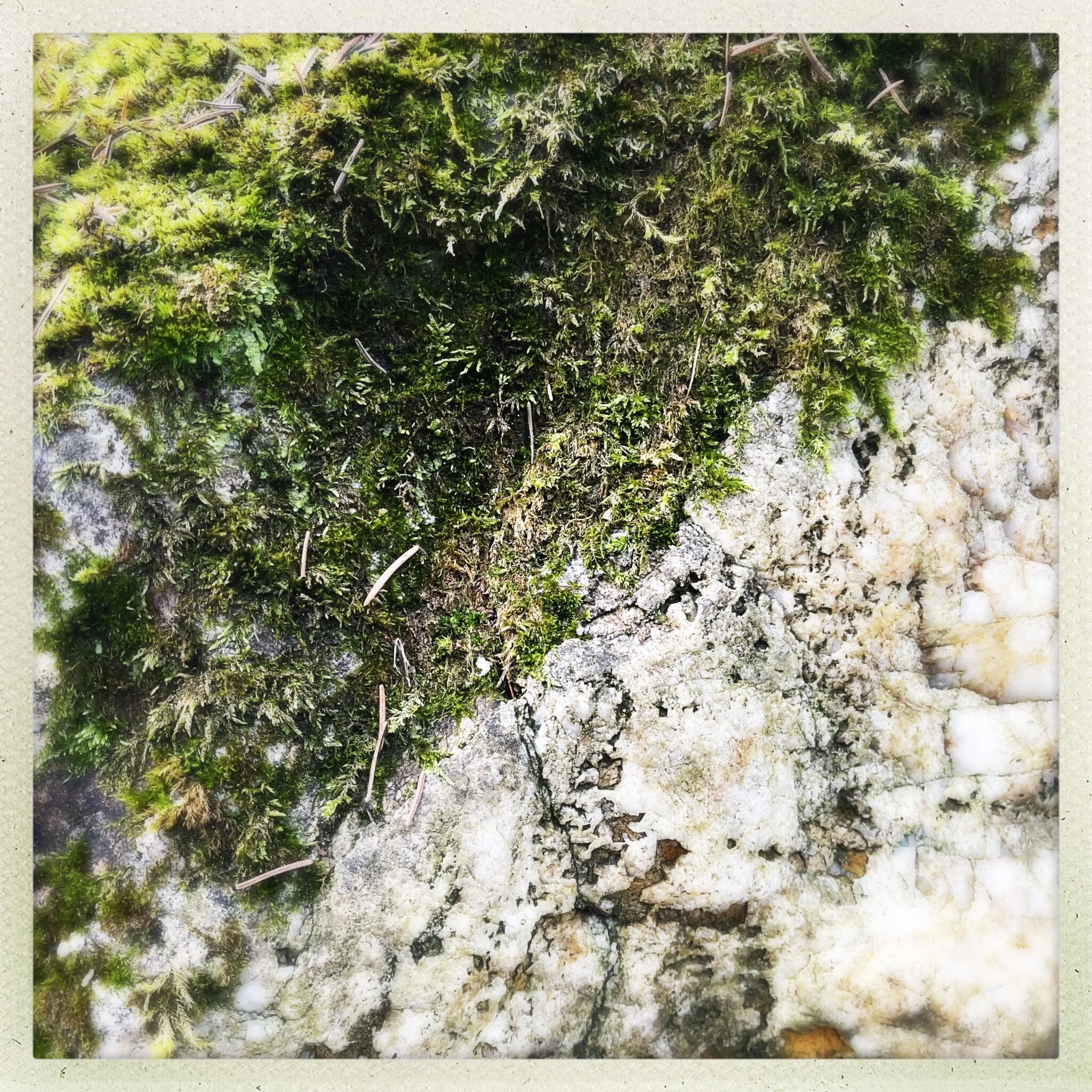
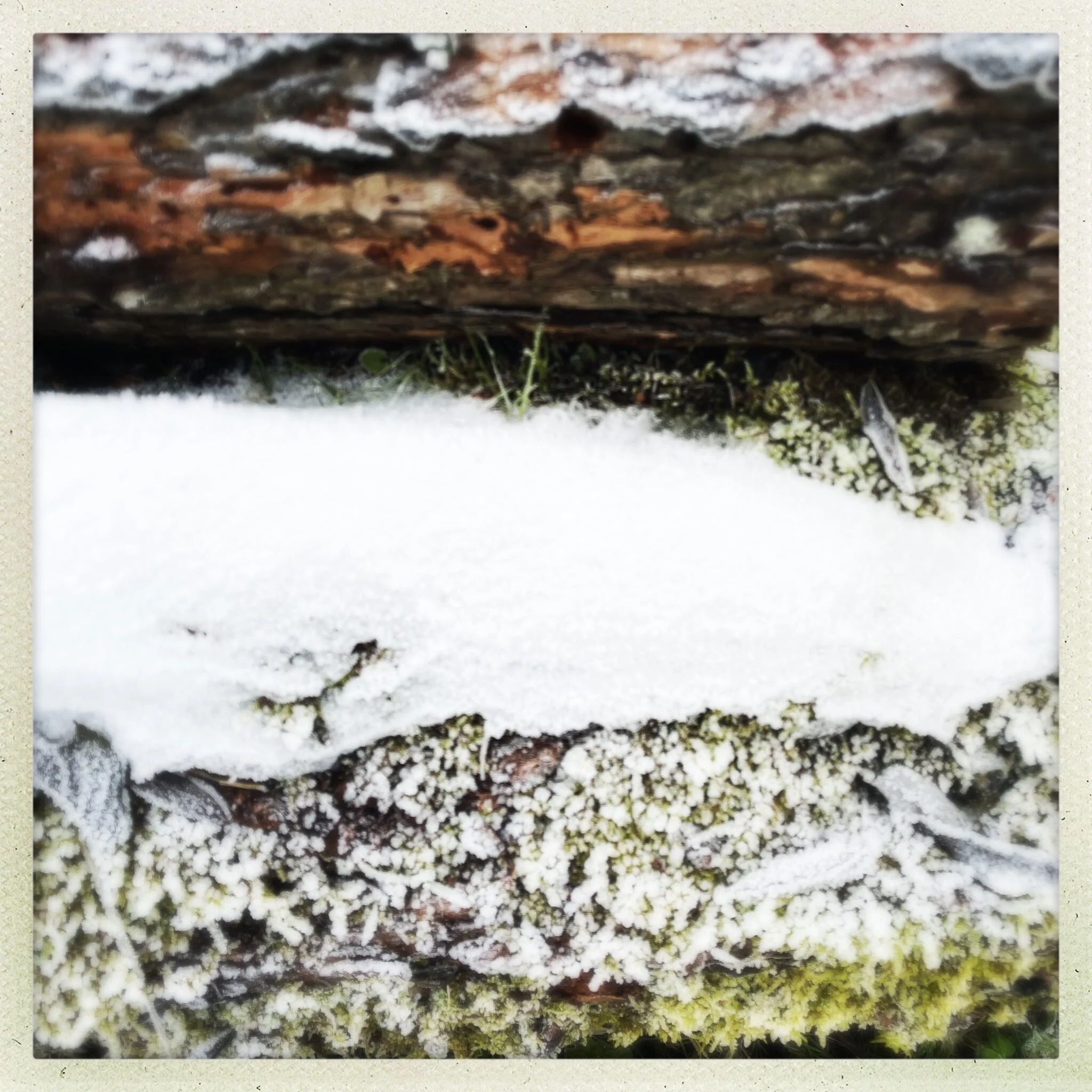
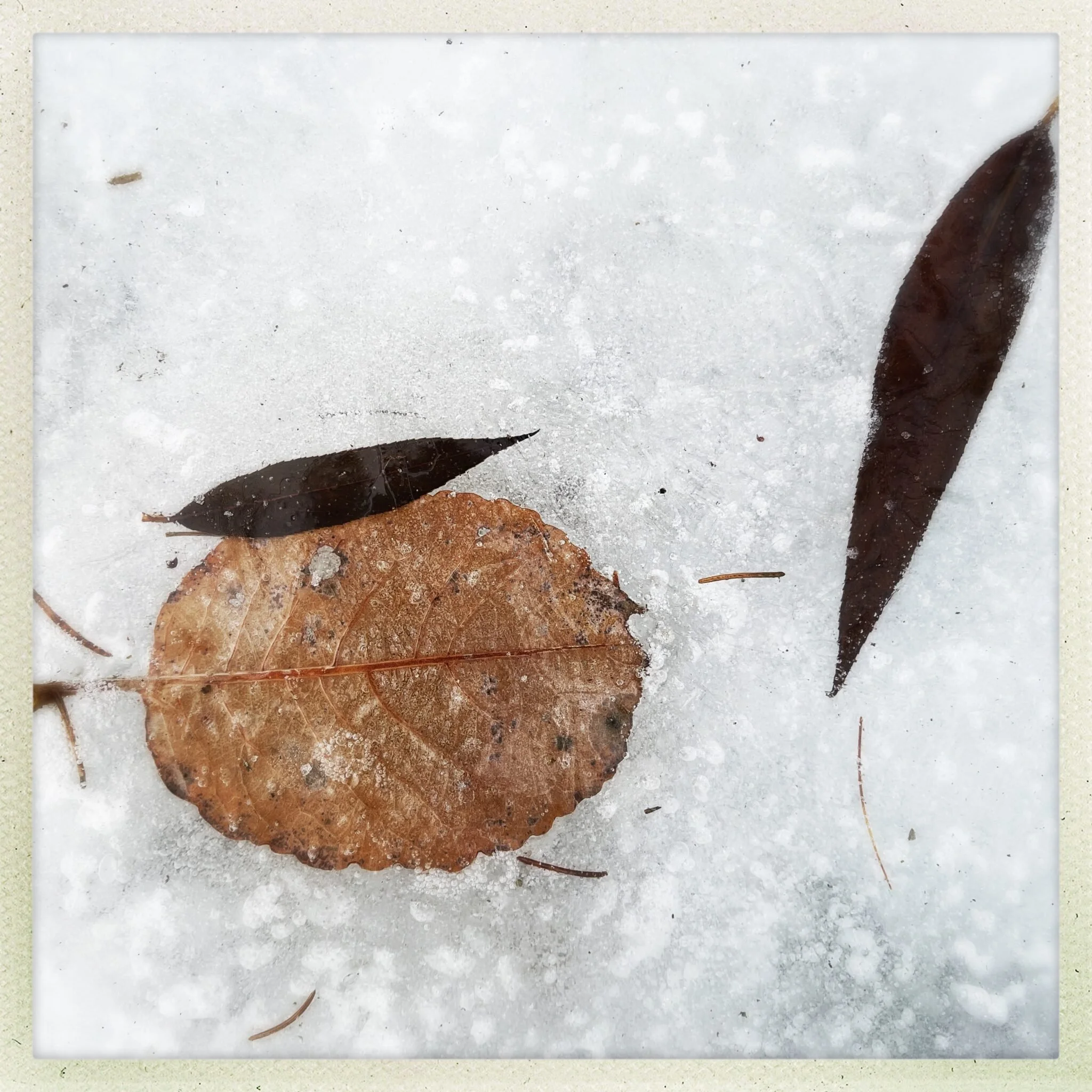
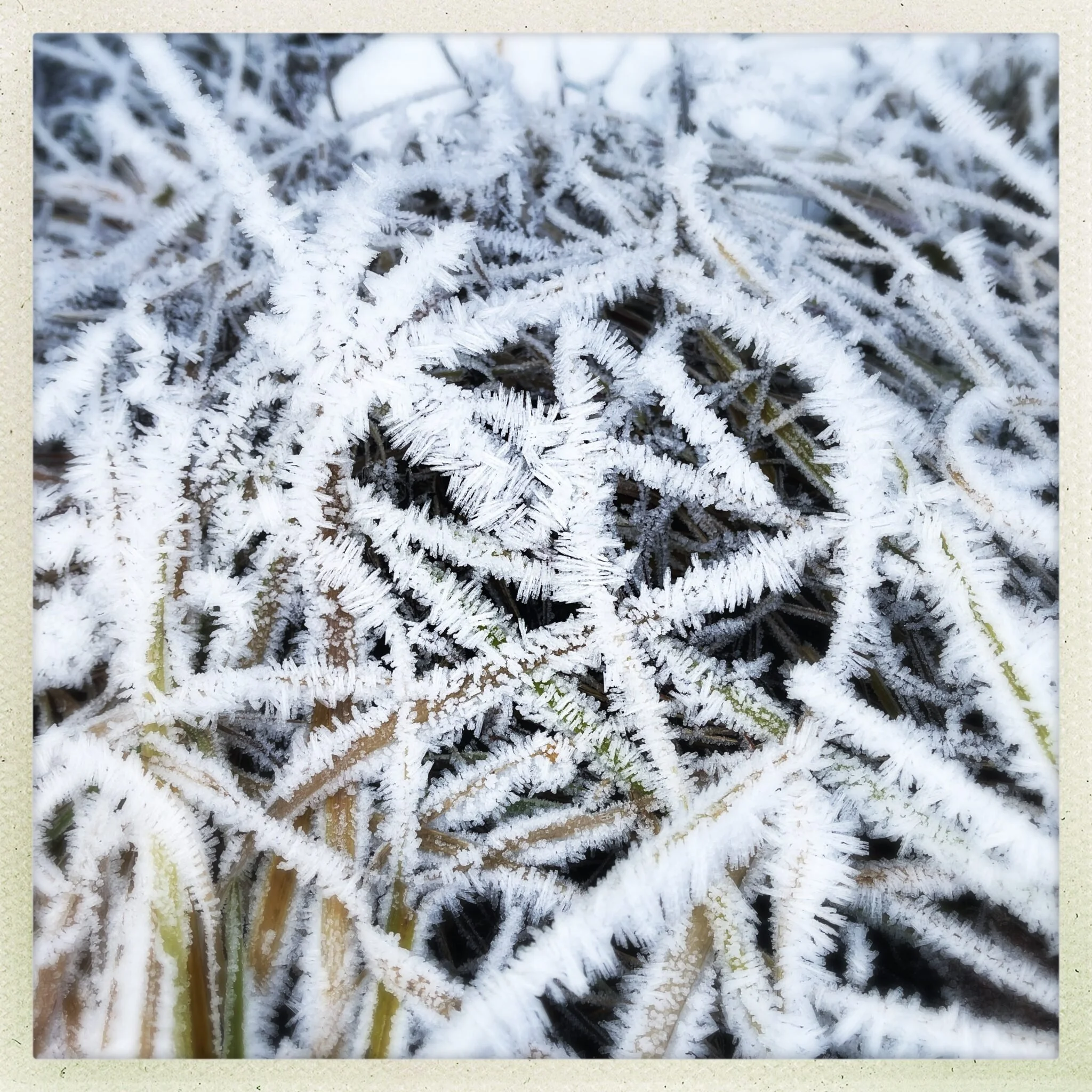
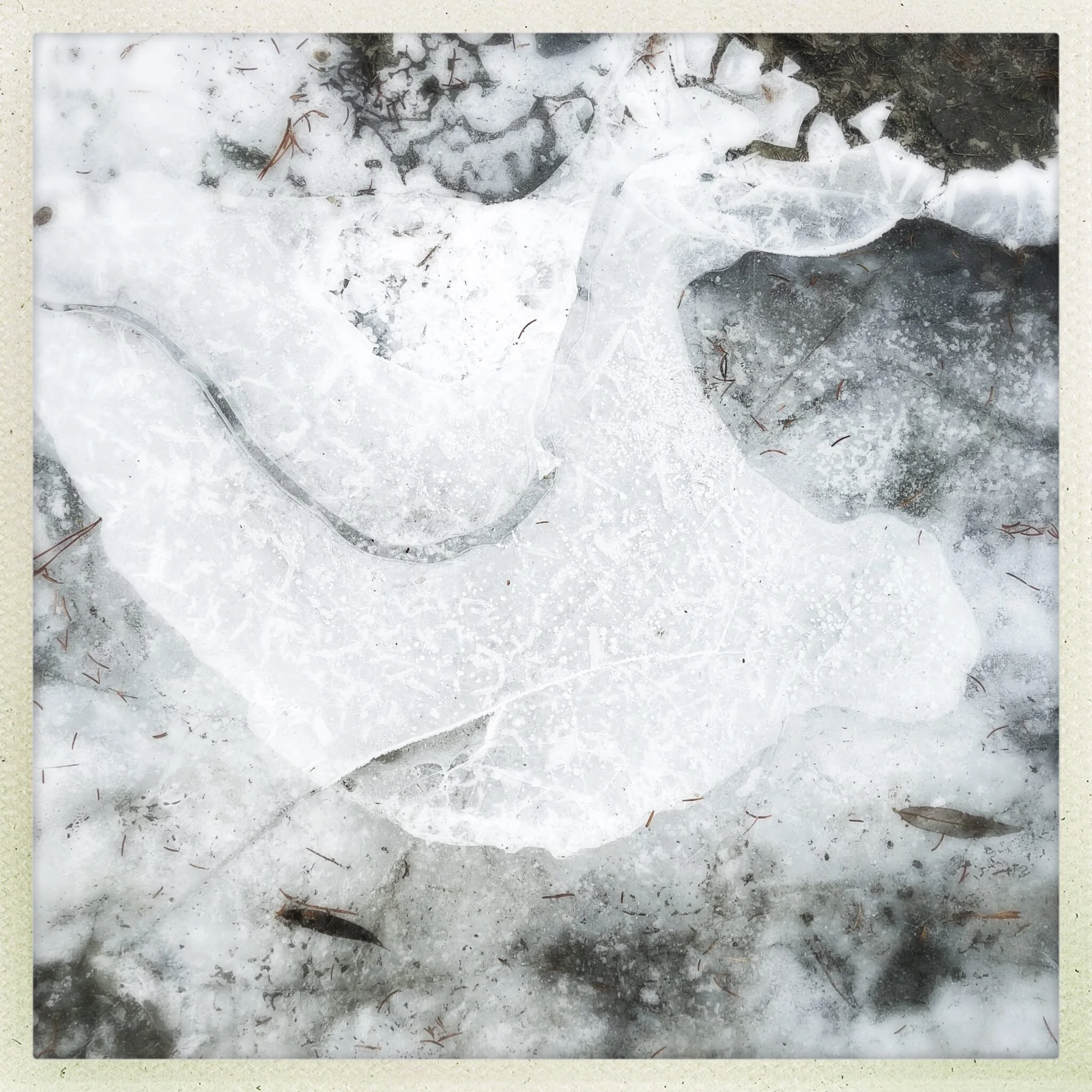
My intention for this painting was to collect the material described above (sticks, sand, grit, foliage, ice, etc) and then use my artistic mediums in a manner akin to the environment I was documenting.
I wanted to keep the gestural qualities of the journey, and as it is continuously adjacent to the water, water on canvas seemed the best inlet to the work.
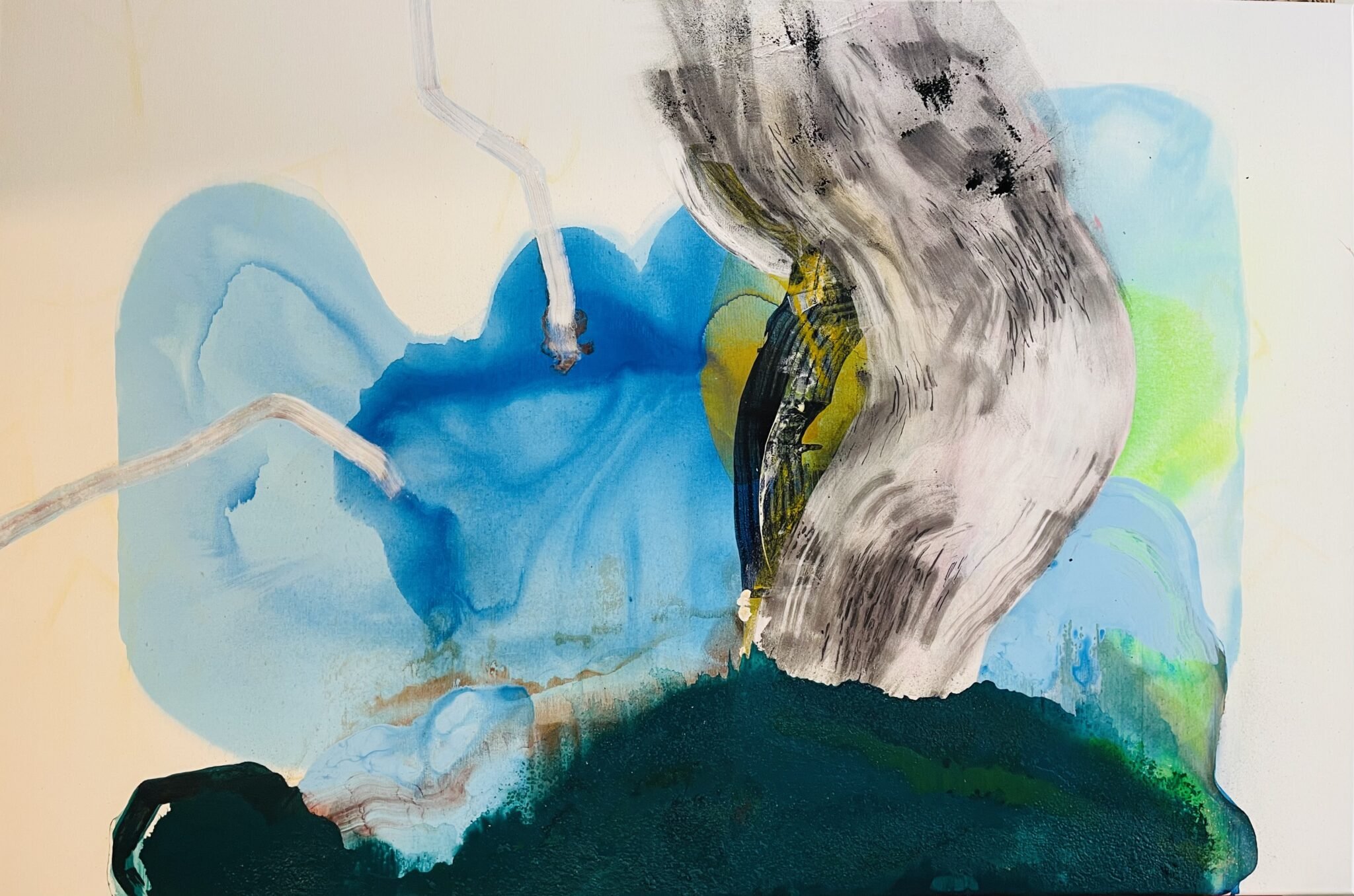
I poured a loose mix of acrylic paint and water into the centre of the canvas. Now allowing the material and its environment to dictate the manifestation. I had been studying the work of Ragna Bley, a Scandinavian painter. She uses the qualities of water to make her paintings ‘live’.
Naturally the paint moved with gravity and its own impetus, as I added more paint it pushed against or merged. I placed the ends of the sticks into the pools of paint. I dragged them through the colours, and eventually I used them to spread the paint and stain the canvas.
Next I divided my time between observation (returning to the journey day after day) and process. The process took the form of a layering technique, next was the terrain. Thicker paint poured into the pools. Finding their own place and blending with the wet shoreline. I grated the foliage and bark and sieved the sand directly into the paint.
This act of leading with materiality rather than aesthetics changed my role with the work. Now I was less the puppeteer and more the conduit. And working horizontally, rather than vertically at the easel, I was more inside the work and less observant and evaluating.
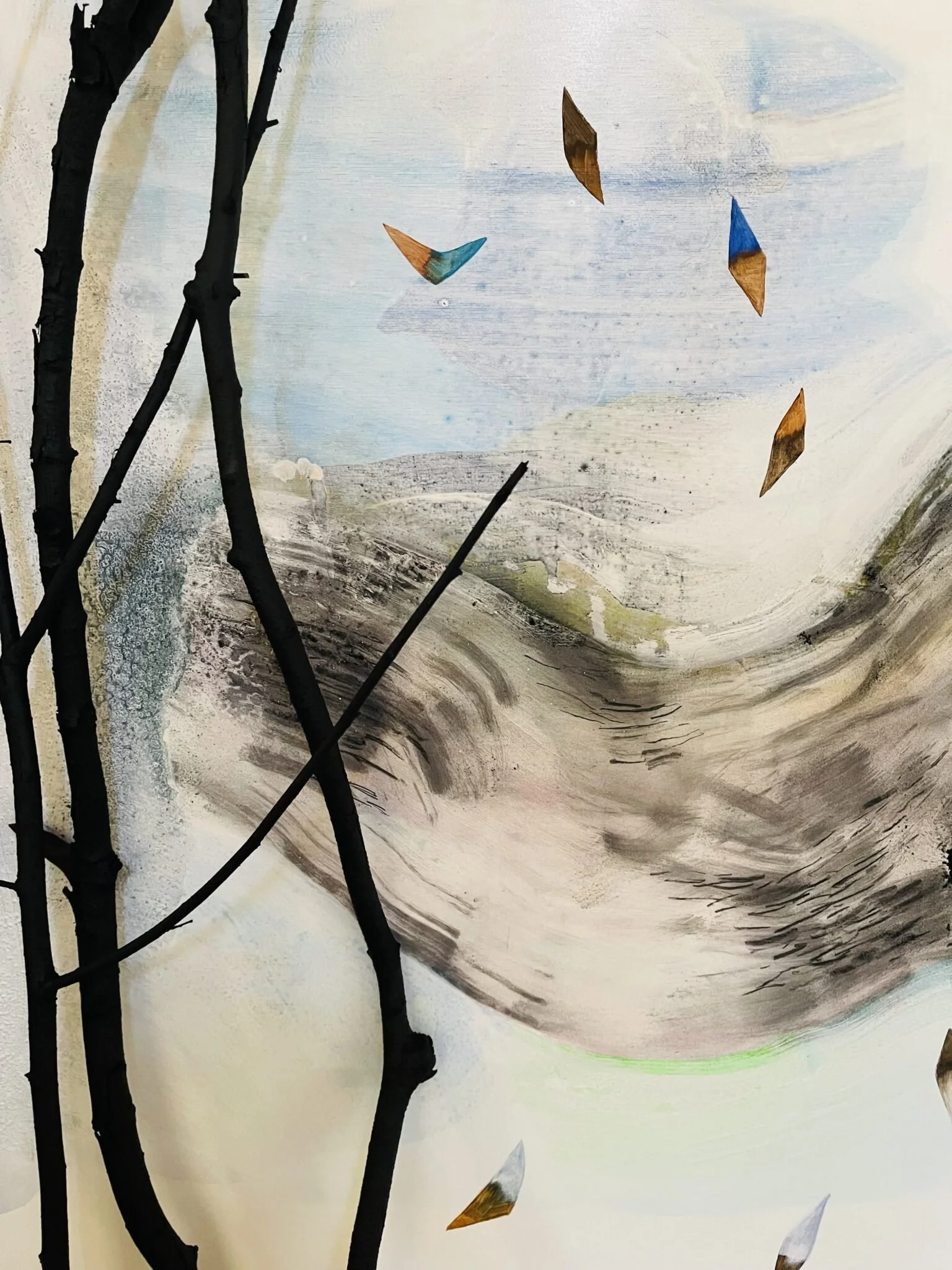
I now had an interesting experimental canvas, but it was time to access the narrative link. In Unit 1.1 I had enjoyed the work of Donna Huranca, and Ragna Bley. Both painters use paint or varying consistencies and add alternative materials for texture and connection to the environment. Researching their work, I began to formulate an idea that I wanted to bring in some mark making. I thought back to the initial exercise and how the translation of energy had inspired fast mark making. There was an area of the painting that had made a natural river course. I referred to one of my sketches in the ‘translation’ exercise and blocked in the course way with white paint and added tempo marks of the river.
Then it snowed.
Deep, heavy, all-encompassing.
The painting sat for a while. Now no longer in sync with my journey. I wrestled with finding the next move. Solutions. Practicalities.
But none came. And then I remembered what I was trying to achieve. Not an escape, or portal to last week’s scene, but staying present. What was at work through the whole process was a synthesis of
Journey becomes Painting
Painting becomes Journey
As the snow fell and covered each element, eventually leaving only the river visible, so fell the paint. White and thick. Leaving only shadows of what lay beneath. Quiet articulations informing tone, texture, and evidence of the landscape.
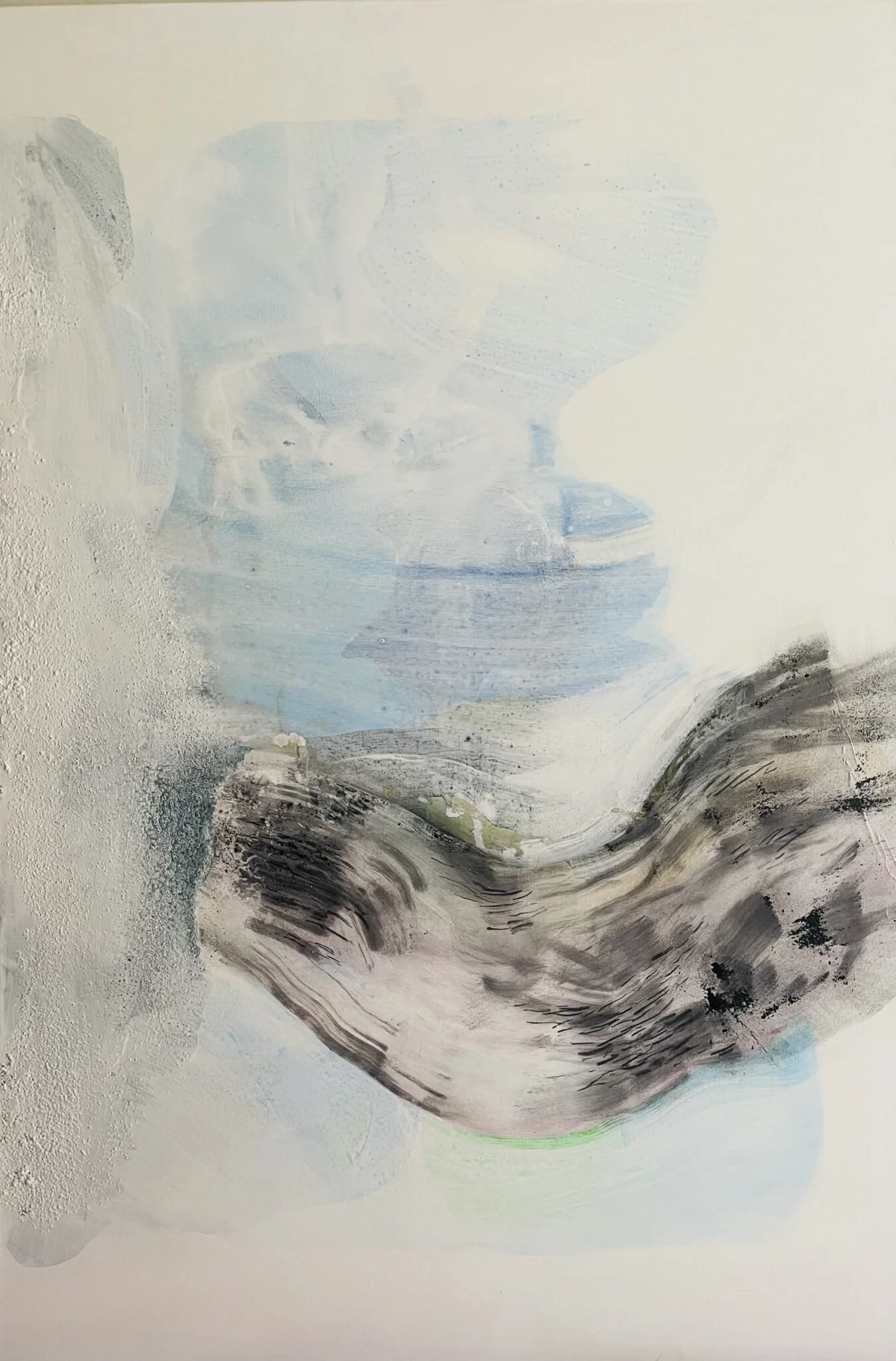
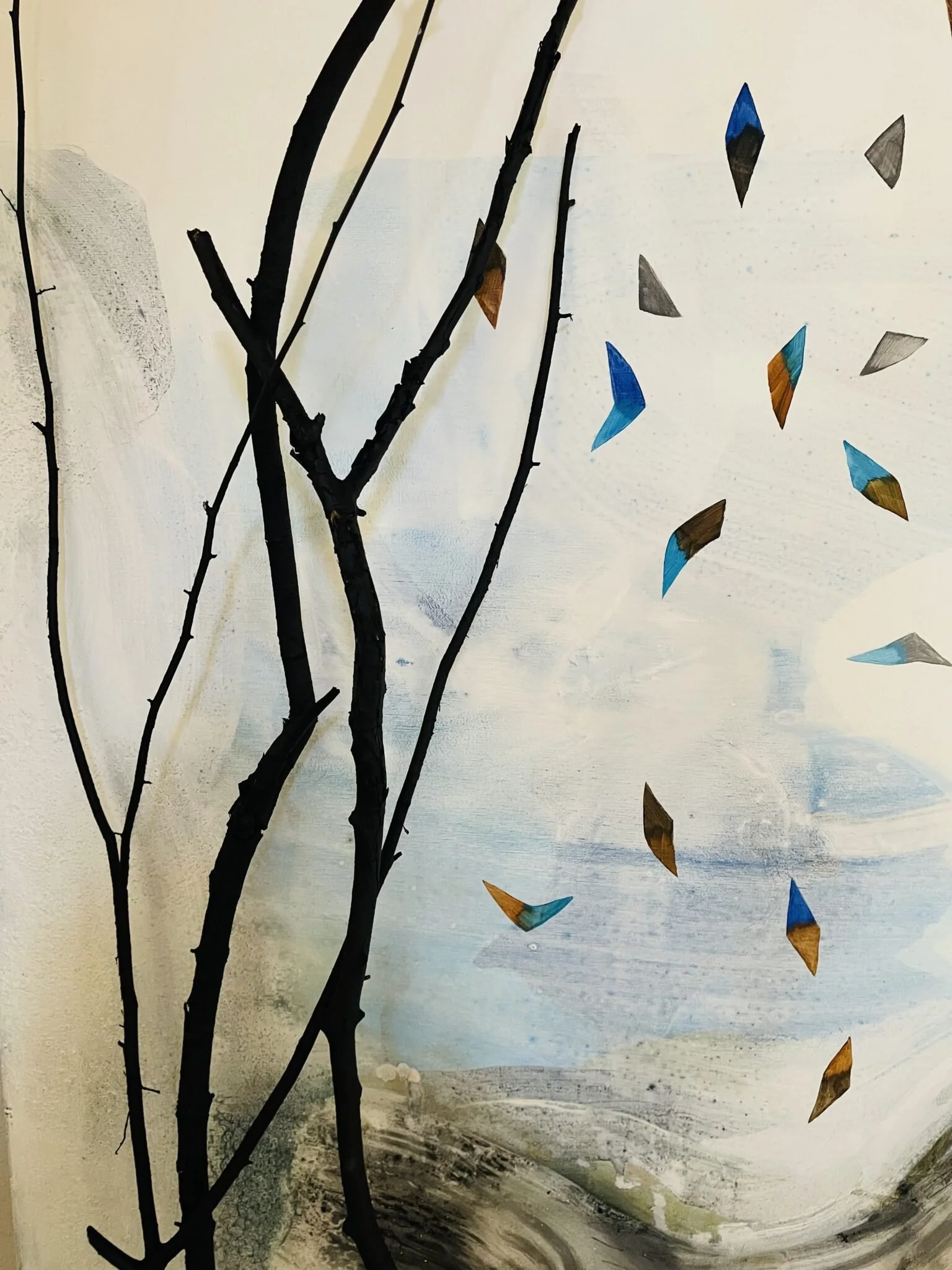
It matched perfectly to return to the first motive of that walk – the ice chips. I had stained them with blue and brown ink for my translation. Triangular shards. And now that imagery sat a top my white out canvas. Dancing along like the merry prank I felt the universe had played on me.
Then lastly to paint the integral branches black like the charcoal sticks to add the physical drawn element to the foreground of the painting.
“Today the weather is heavy.
Rain, snow, sleet.
Grey clouds cushioning the steeples of the pines,
Disappearing into their softness.
Everywhere feels like nowhere.”
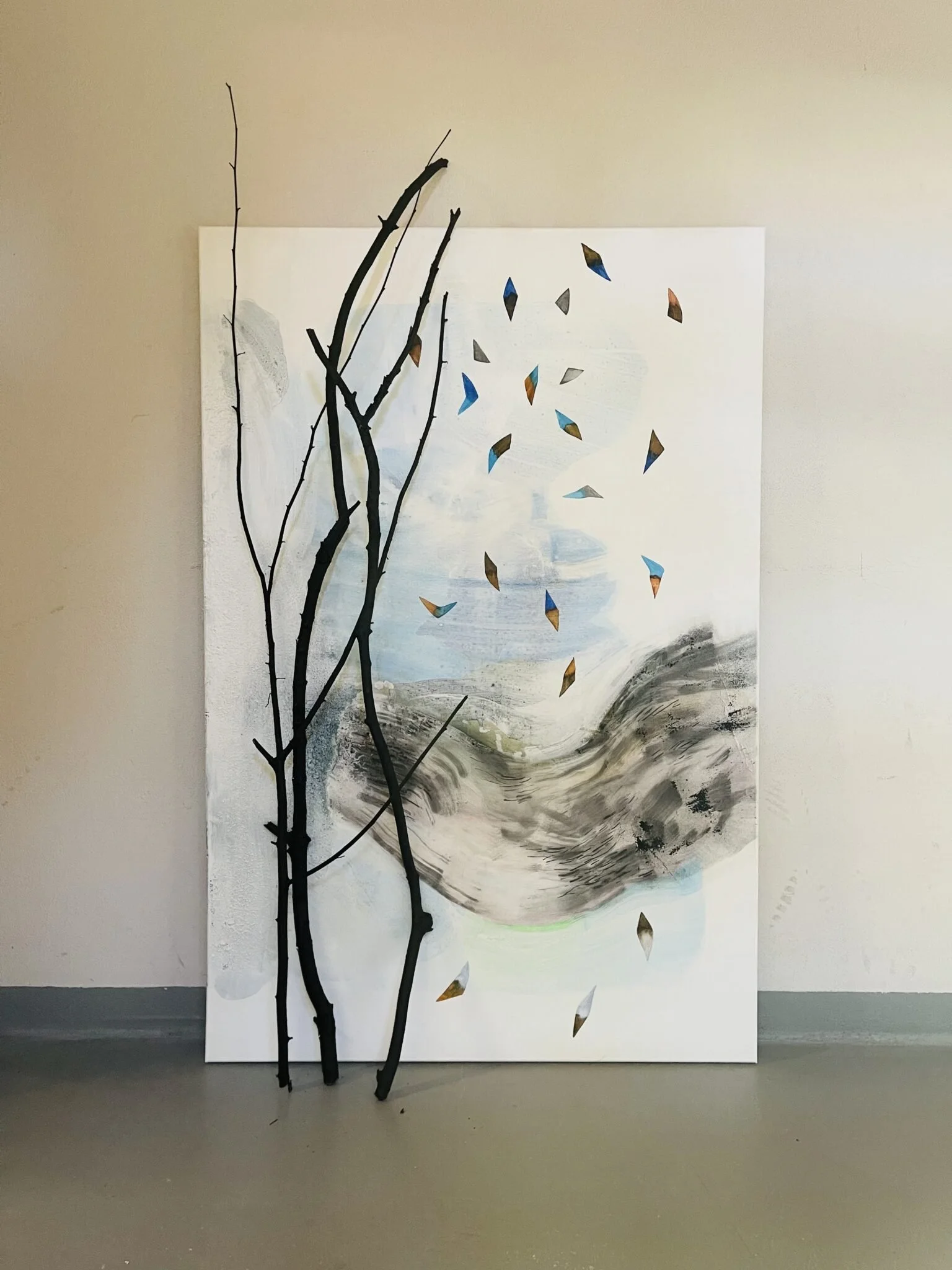
Artists looked at: Ragna Bley for use of pouring paint in the initial stages. And Donna Huanca for adding textural elements to the paint.
https://ocula.com/artists/ragna-bley/
https://www.ruaminx.com
All words and images courtesy of the author.