[FCT: TOUCH]
Brief: Once you have created a series of translations, lay them out and evaluate; looking for any possible dialogues emerging between them, or identifying any techniques that you want to explore further in the following exercises. Extract between two and three pieces and consider them to be your initial material library to reference in the following stage.
Exploring the use of material representation to create techniques offers up more possibilities for painting practice. Noting their effect leads to a greater resource of mark making, and also a purpose behind those marks. Less happy accidents and more intelligence driven actions.
Perhaps the easier way to say it is it increases the narrative behind abstract mark making.
The following ‘Drawing’ although abstract in nature bears more narrative because of its origins.
The studies (translations) that lead to this piece are very resolute.
Since the 1.1 Project ‘Voice’ I have been increasingly interested in the dialogue between techniques and materials. And how their connection adds agency to the story behind a piece of work.
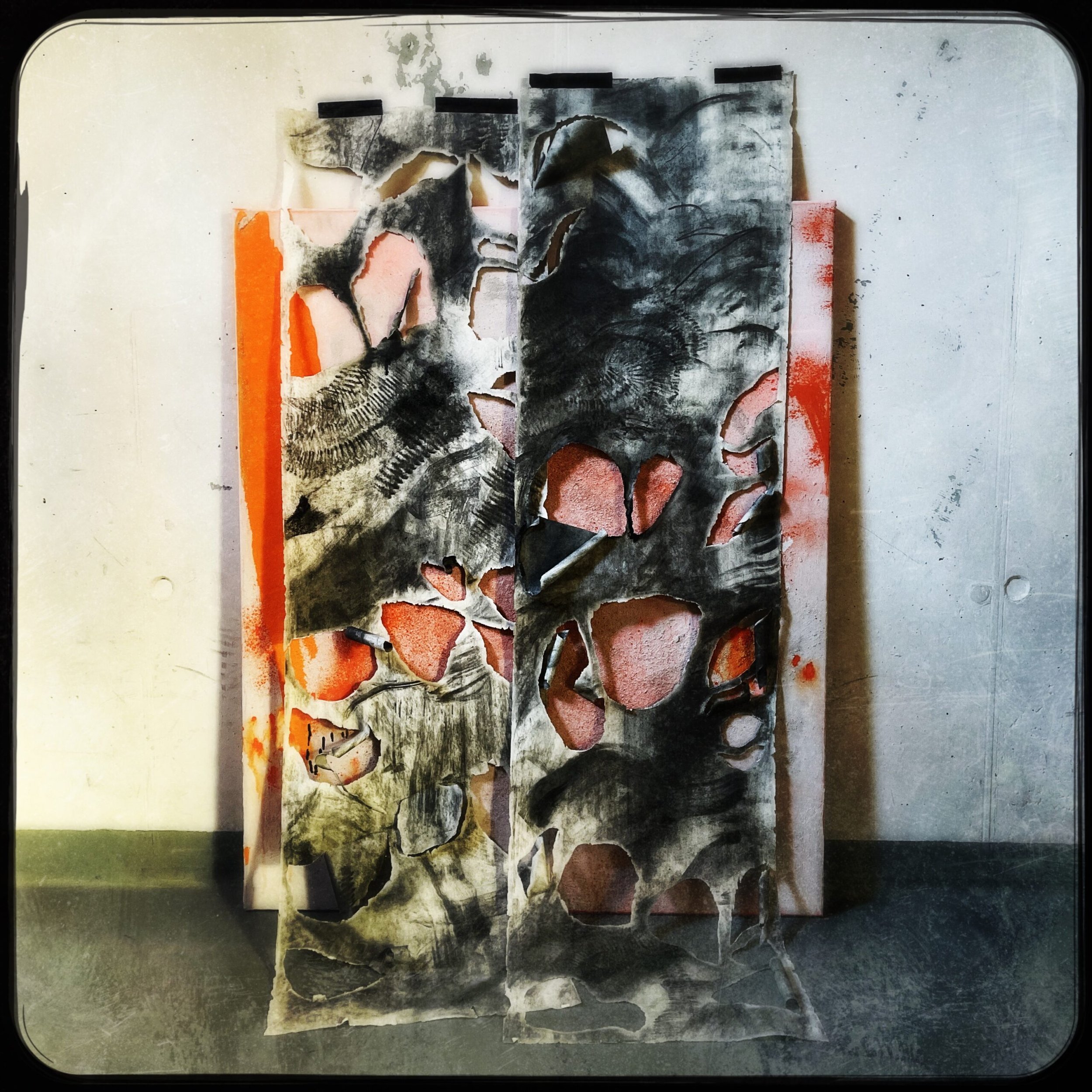
RAW / DRAPE / TORN + EXPOSED
LANDSLIDE
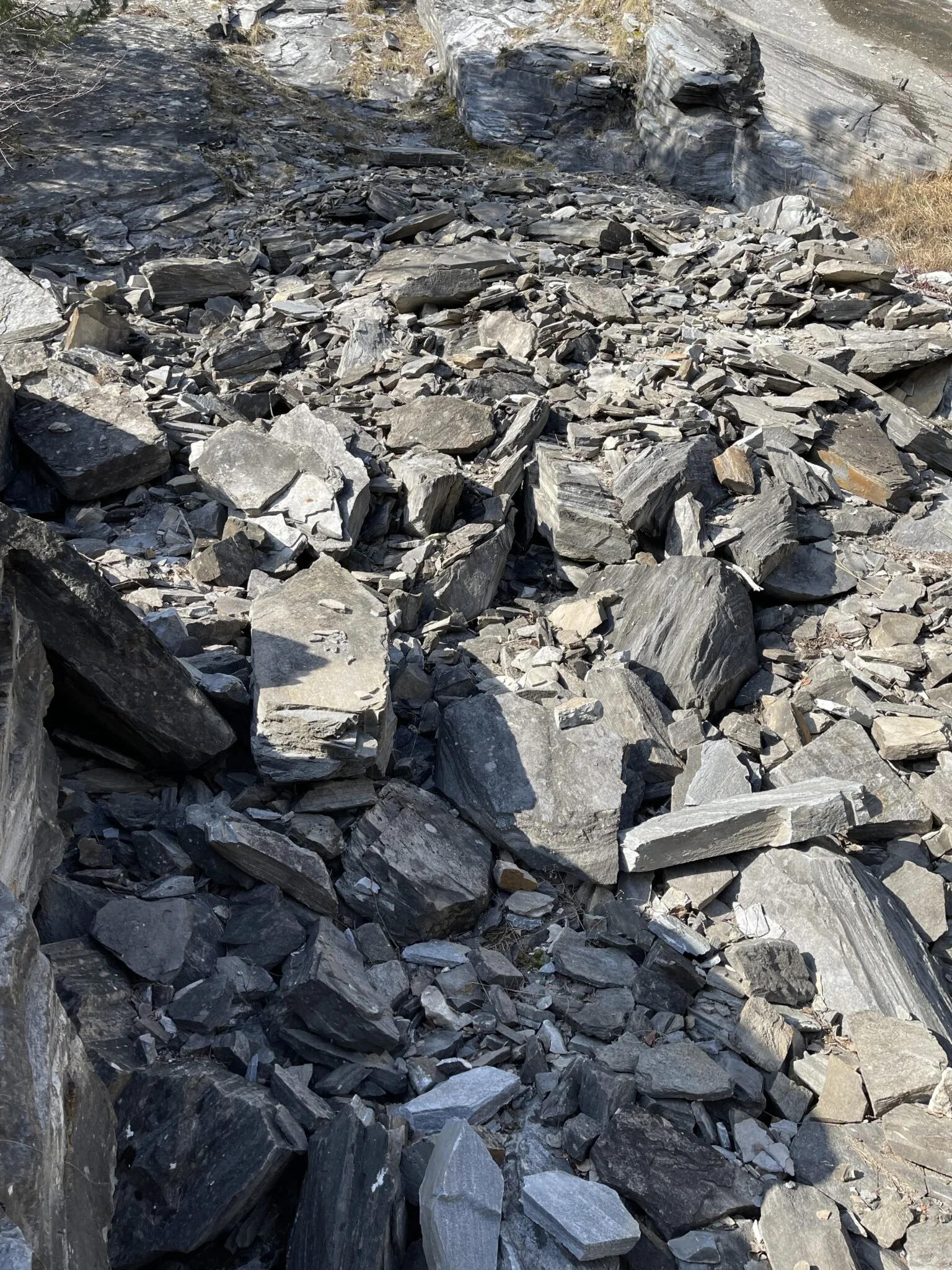
For this blend of ‘Translations’ I created a piece concerning the local landslides. They are relatively rare, yet apparent.
By documenting connections to nature using artistic dialogue, it hopefully creates an awareness. A silent observation that rouses thoughts and leads to the next rotation of analysis and engagement.
Drawing investigations can instigate an enquiry of how their origins – a combination of environmental factors and human contributions reside simultaneously. To conclude, the material manipulation used here, eroding, draping, cutting away, act like prompts for the viewer to acknowledge these events and perhaps consider their own thoughts about environmental activity.
“I’m not telling you to make the world better. I’m just telling you to live in it. Not to endure it, not just to suffer it, not just to pass through it, but to live in it. To look at it. To try to get the picture. To live recklessly. To take chances. To make your own work and take pride in it.”
– Joan Didion
Visiting the landslide site, it is a charged place. You feel vulnerable as although it has settled, there is continuous motion. The environment is active. Delicate things reside around these huge threats. Mocking my personal fear.
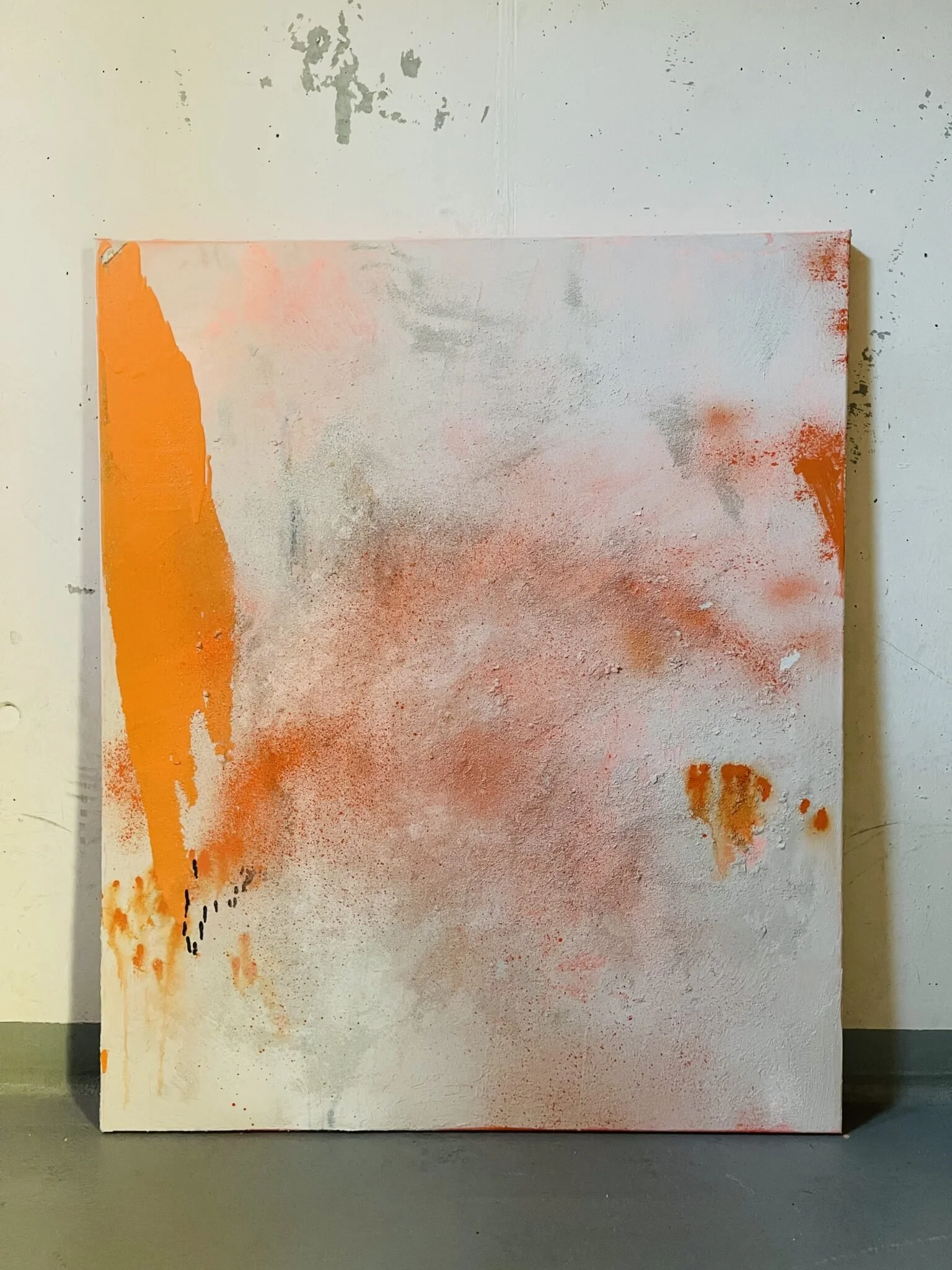
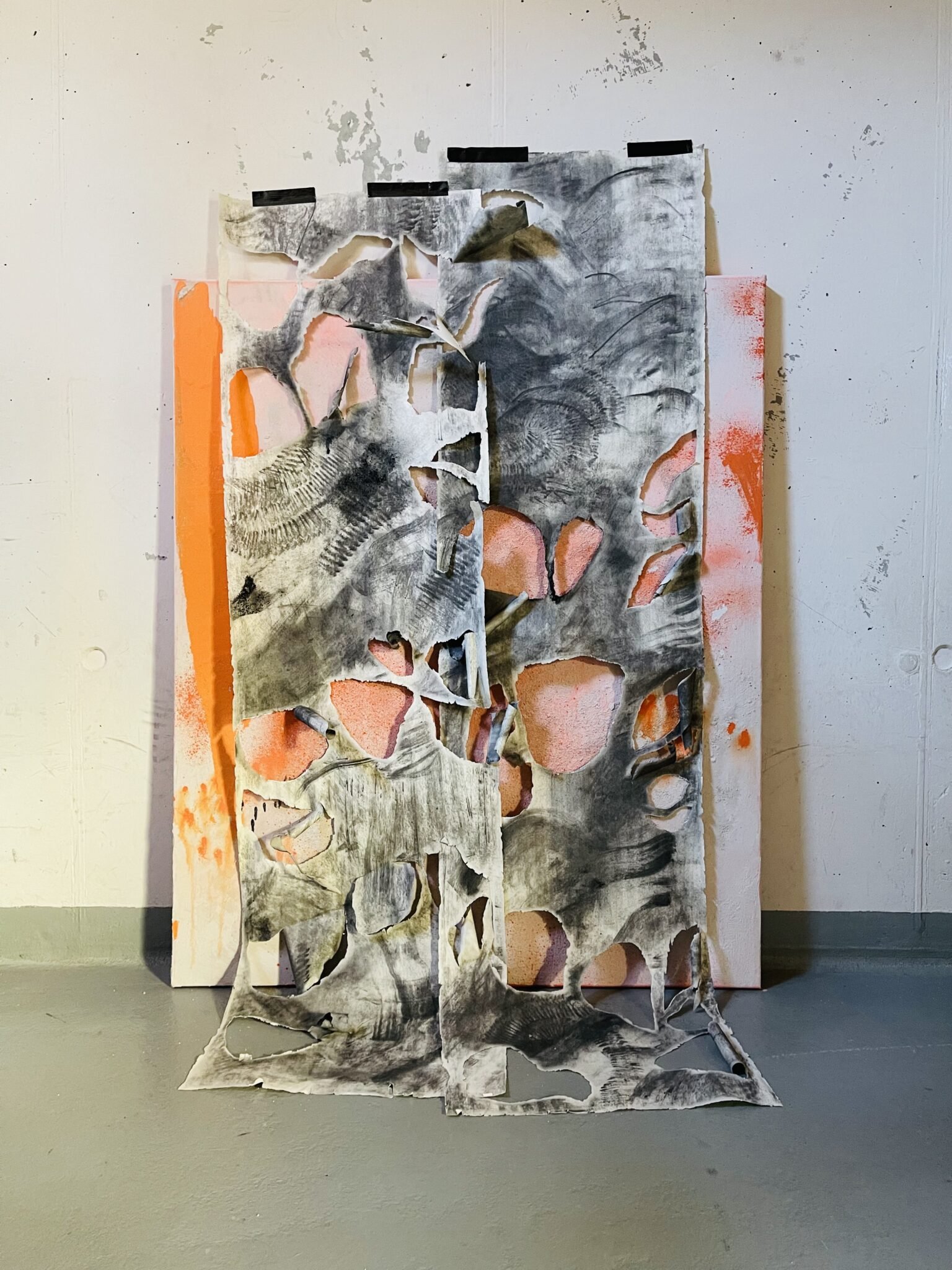
I used my original technique of rock rubbings for raw. Dissolution of clay pigment on canvas for exposed. And paper over the canvas for draped.
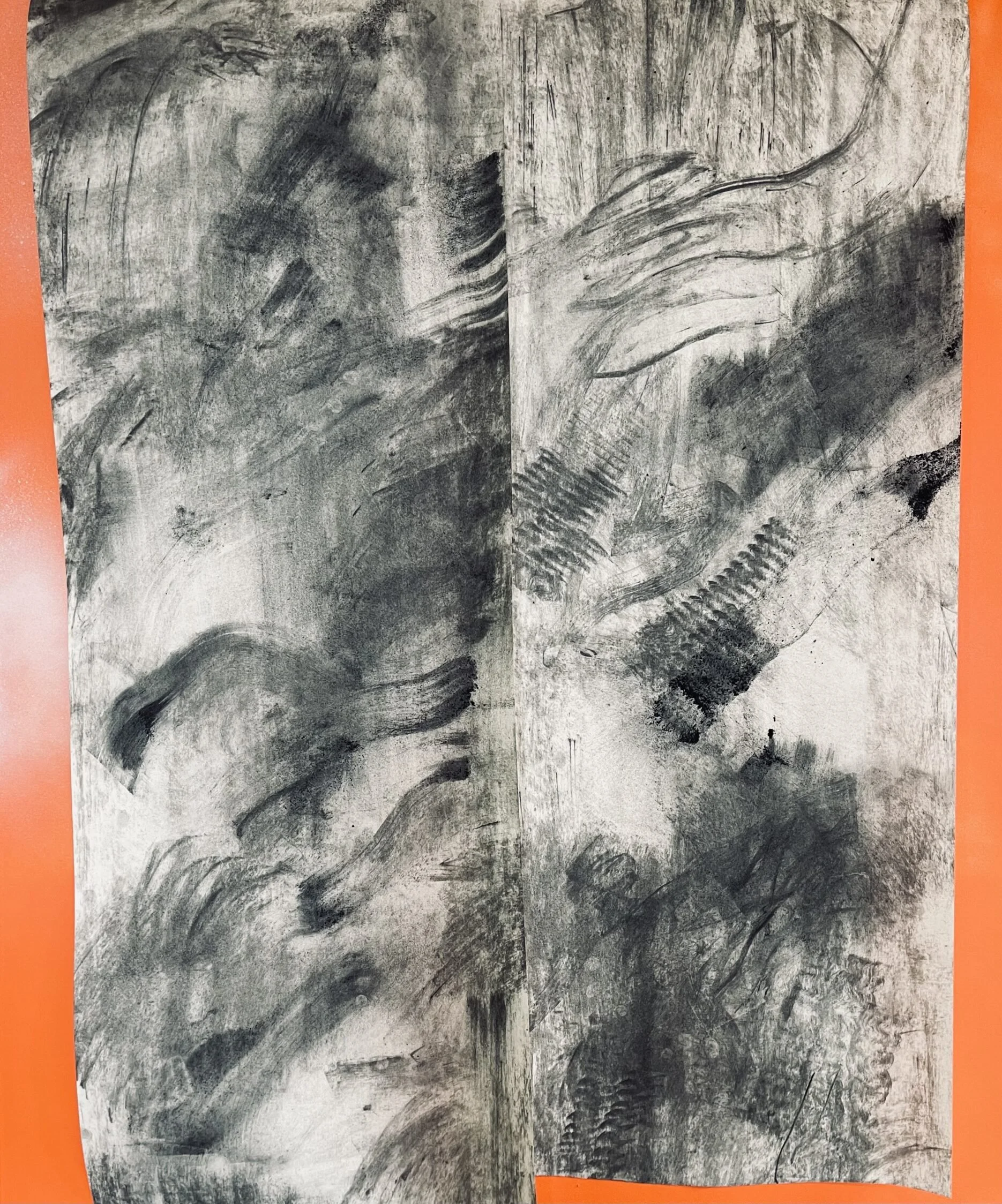
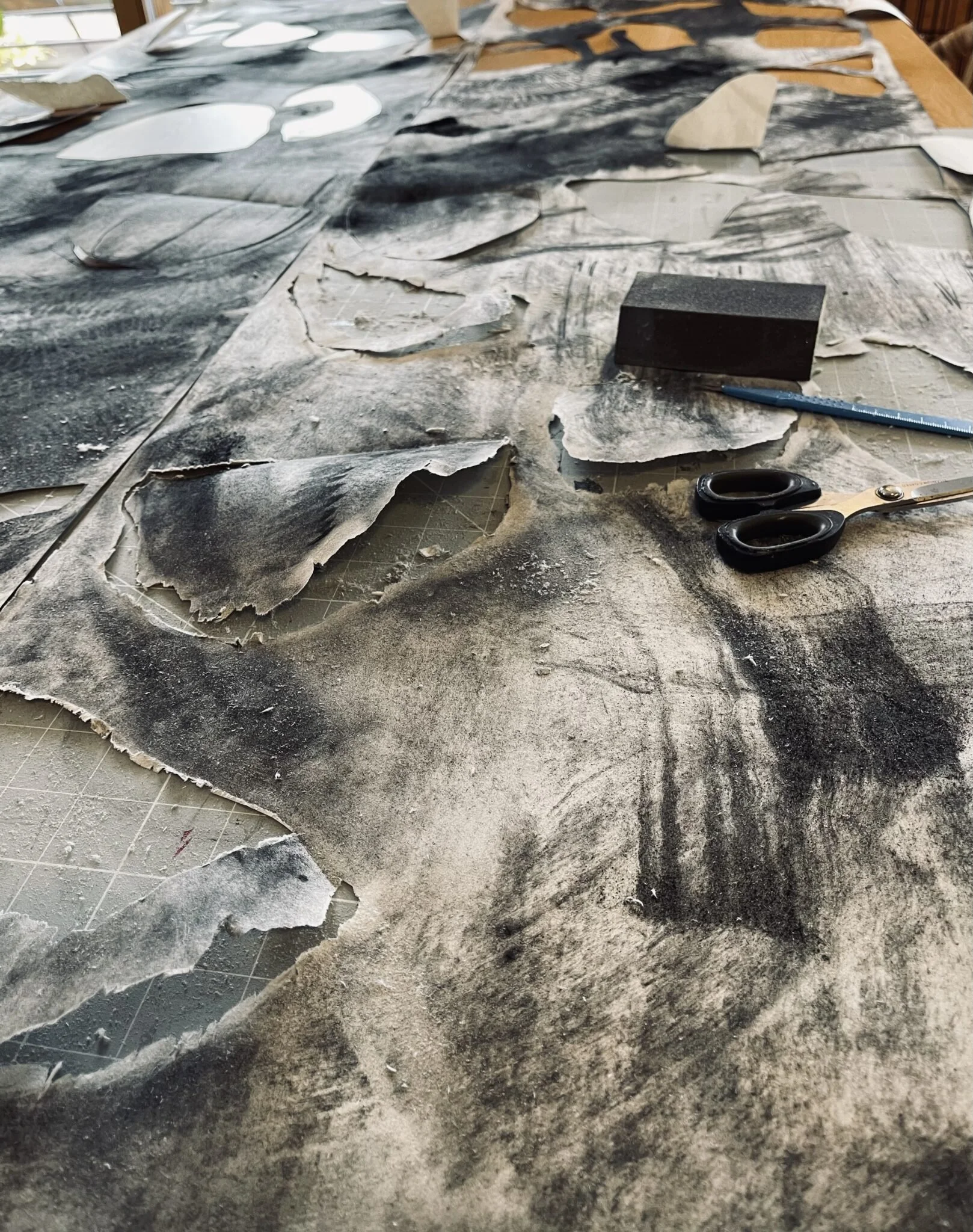
The layers in the rock that I took the initial rubbings from sit like ripples on the surface, but they are evidence of a deeper archaeology. I wanted to erode the drawing, to represent the instability of the rock face. I scrubbed at the paper with charcoal blocks, and sanding blocks. Eventually releasing some for the rock shapes from the paper leaving holes where they had fallen.
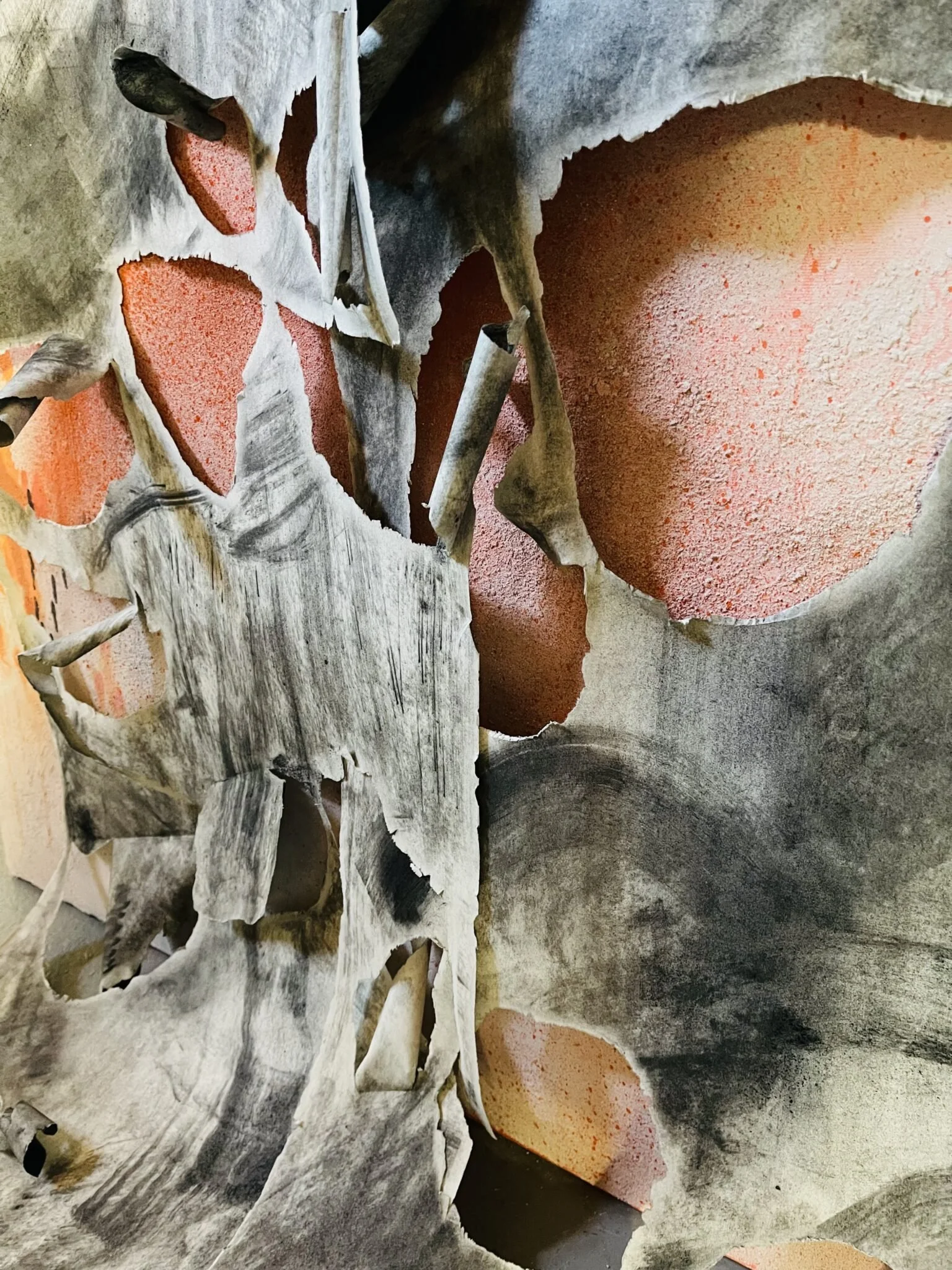
Then I layered the canvas base time and again with paint, clay pigment, spray paint, dividing each layer by scrapping back and exposing the previous.
Lastly, I draped the finished drawing over the canvas to create a tumbling effect. Ripping and sculpting the paper to fuse it together for the final composition.
Artists looked at: Ali Silverstein and Vincent Hawkins for their use of paper in a sculptural nature.
Donna Huanca for use of textural material in paint.
https://alisilverstein.com
https://www.instagram.com/vincent_hawkins_/
https://www.ruaminx.com
Quote from Joan Didion – Source unknown
All other words and images courtesy of the author.